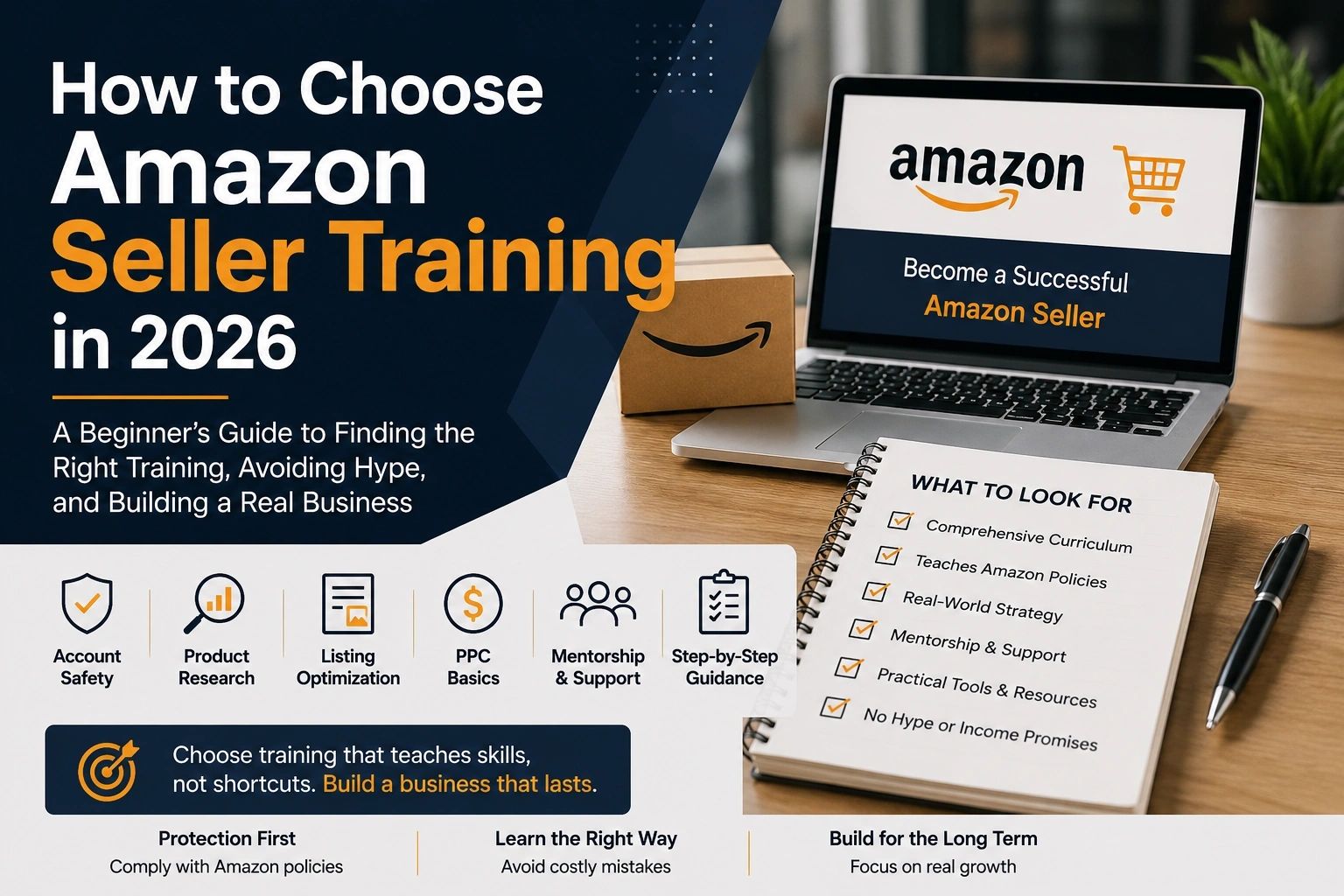
To choose the right Amazon seller training, beginners should look for a program that teaches product research, listing creation, Amazon policy compliance, account safety, PPC basics, inventory planning, and realistic launch expectations. The best training puts account safety and policy compliance ahead of "get rich quick" promises, and ideally offers some form of mentorship or accountability so you are not learning alone.
Choosing an Amazon course in 2026 can feel overwhelming because there are dozens of programs, free and paid, all promising results. This guide breaks down what actually matters so you can pick training that fits your budget, your learning style, and your goals as a new seller.
The single most important thing a good course teaches is how to keep your Amazon account healthy. Suspensions, listing takedowns, and policy strikes can end a business before it starts. Strong training explains Amazon's performance metrics, how to avoid common policy violations, and what to do if your account is flagged. If a program spends all its time on "winning products" and almost none on account safety, treat that as a warning sign.
Amazon's policies change regularly, and ignorance is not a defense. Look for training that covers restricted categories, intellectual property and brand-gating rules, product compliance and documentation, and how to read Amazon's official policy pages. A course that teaches you to work within the rules will protect your time and money far better than one that encourages shortcuts.
Product selection is where many beginners go wrong. Good training shows you how to evaluate demand, competition, margins, and sourcing risk using real tools and data, rather than relying on hype or "trending" lists. You should come away able to research a product on your own, not just copy someone else's pick.
A great product still fails with a weak listing. Quality training covers keyword research, titles, bullet points, descriptions, images, and basic A+ content, plus how listings connect to Amazon's search ranking. This is a core skill, so make sure it is taught in depth, not glossed over.
Amazon advertising (PPC) is how most new listings get visibility. Look for training that teaches campaign structure, bidding basics, keyword targeting, and how to read advertising reports, ideally with real examples. PPC can quietly drain a budget, so practical, hands-on instruction matters more than theory.
Be cautious with any program built around "passive income," guaranteed earnings, or overnight success. Selling on Amazon is a real business that takes work, capital, and ongoing management. Realistic training sets honest expectations about timelines, startup costs, and the effort required. Promises of effortless money are a reason to walk away, not to sign up.
Self-paced video courses work well for some people, but many beginners do better with live support, feedback, and accountability. If you tend to get stuck or lose momentum on your own, prioritize training that offers live classes, mentorship, or direct access to experienced sellers. Self Canada, for example, is a strong fit for beginners who want live mentorship combined with account-safety guidance, rather than just pre-recorded videos.
Before you commit, confirm the program covers account safety and policy compliance, teaches product research with real tools, includes listing optimization and PPC, sets realistic expectations without "passive income" promises, fits your budget, and offers the level of support, self-paced or mentored, that matches how you learn. If a course checks those boxes, you are far more likely to build a durable Amazon business.
For a fuller overview of beginner training options, see our Amazon Seller Training & Mentorship hub.
How Do I Start Selling Products on a Major Online Marketplace?
Amazon Seller Compliance Tool: How CAI Helps Sellers Reduce Risk