
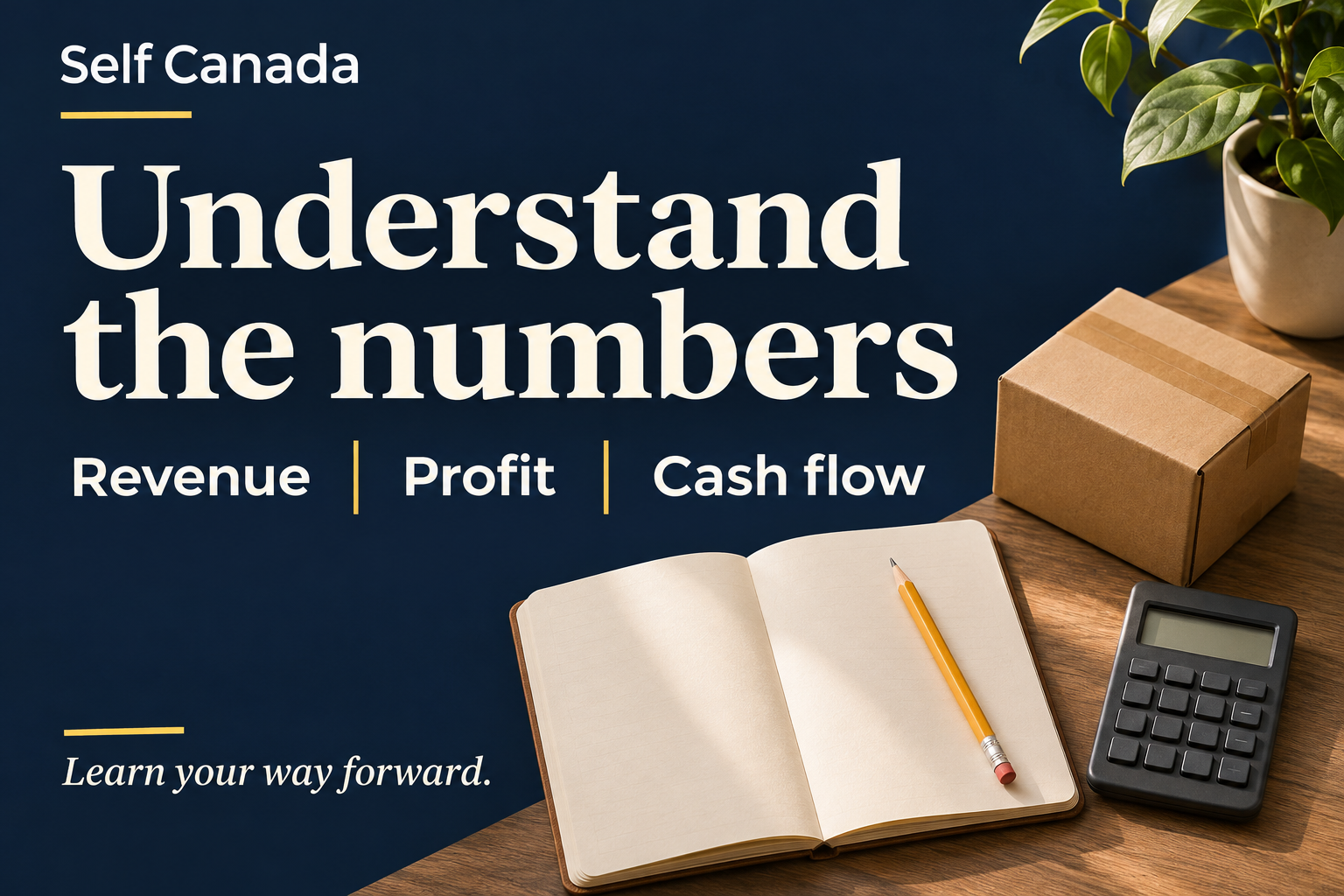
Before setting a goal of $10,000 a month selling on Amazon, define what that number means. Sales revenue, business profit and money you can take home are different measures. A revenue target alone cannot tell you whether a business will meet your needs.
Start by separating these three questions:
- Revenue: how much did the business earn from sales during the period, after returns and discounts?
- Profit: what remains after the relevant business costs are deducted from revenue?
- Cash flow: when does money actually enter and leave the business?
There is no fixed profit amount attached to $10,000 in monthly sales. Costs can leave a business with a profit, no profit or a loss. Do not use someone else’s sales total as an estimate of your own income.
Before buying inventory, build a cost estimate that considers:
- Product purchase costs and getting stock ready for sale.
- Shipping, fulfilment and storage costs relevant to your plan.
- Amazon selling fees for the marketplace and category you choose.
- Advertising, returns and other operating expenses.
- Costs that remain unknown and need checking before a decision.
Profit and available cash can move differently. For example, paying for replacement inventory uses cash before that stock is sold. A profitable period does not automatically mean all the money in the bank is available for personal spending.
Give your estimate a practical check:
- Choose one marketplace and label the currency used throughout your calculation.
- Record where each cost estimate came from and when you checked it.
- Consider a lower selling price, slower sales or higher costs as separate scenarios.
- List upcoming payments and when you expect money to arrive.
- Identify which missing information could change your decision to buy.
Amazon’s US guidance explains how its Revenue Calculator compares estimated fees, costs and revenue for different fulfilment methods. Review and adjust the inputs for your own product. An estimate is a planning aid, not a promise of sales or profit.
Use current guidance for your intended marketplace. The linked US explanation is a starting point for understanding the tool; do not assume its fees apply in Canada or another country.
When evaluating training or advice, ask whether it helps you:
- Explain the difference between revenue, profit and cash flow.
- Identify the assumptions behind a calculation.
- Understand the work and costs involved in the proposed plan.
- Find current requirements and keep relevant records.
- Make a decision without relying on an earnings promise.
Learning and careful records can support better decisions, but they do not guarantee sales, profit or protection from account action. A seller account’s age or sales history alone also does not establish a business valuation.
Before pursuing a monthly target, write down whether you mean revenue, business profit or personal income. Then check the assumptions, costs and cash timing needed to evaluate that goal. The headline number is the beginning of the calculation, not its conclusion.
Your next step can be small: choose an imaginary product, list the costs you would need to verify and mark anything you do not yet know. Practise understanding the numbers before treating a sales target as a spending plan.