Selling on Amazon can be highly profitable—but only for sellers who approach it as a structured business, not a side hustle driven by hype. While many sellers generate strong revenue, long-term success depends on product strategy, cost control, advertising discipline, and, most importantly, compliance with Amazon’s policies.
In recent years, third-party Amazon sellers have reported average annual revenues of approximately $290,000, though net profit varies significantly based on experience, business model, and execution. Studies consistently show that around 60–64% of sellers become profitable within their first year, but a meaningful percentage also fail due to poor planning or account-related issues.
This is where education and proper guidance matter—especially in Canada, where many sellers lose accounts due to documentation and compliance gaps rather than lack of demand.
Amazon sellers’ earnings range widely, but realistic benchmarks help set expectations.
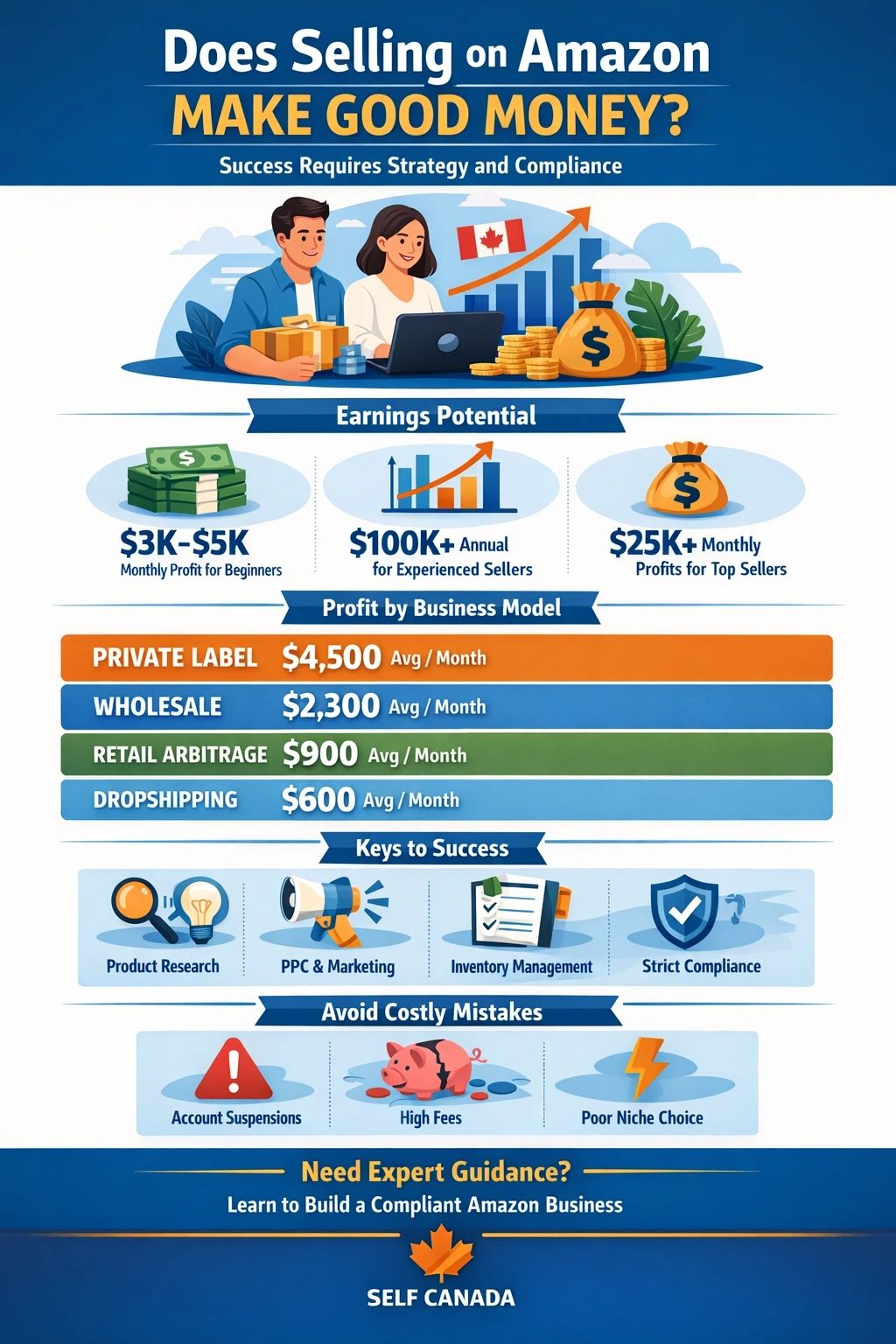
- 45–60% of active sellers earn between $1,000 and $25,000 in monthly revenue
- Well-managed beginner accounts often reach $3,000–$5,000 in monthly net profit after fees
- Full-time sellers with 2+ years of experience frequently exceed $100,000 annually
- Top-performing sellers generate $25,000+ per month in profit through optimized systems
Average net margins typically fall between 15–30%, depending on the model, with Private Label offering the highest upside when executed correctly.
Business Model% of SellersAvg Monthly ProfitPrivate Label58%~$4,500Wholesale22%~$2,300Retail Arbitrage12%~$900Dropshipping6%~$600
Private Label offers the strongest long-term potential but requires deeper knowledge of sourcing, branding, and compliance. Wholesale tends to be more stable but demands proper brand authorization and clean invoices—an area where many sellers struggle.
Profitable Amazon businesses share several common characteristics:
- Strong product research backed by real demand and manageable competition
- Effective PPC strategy, avoiding wasted ad spend
- Inventory and cash-flow management to prevent stockouts and long-term storage fees
- FBA utilization, which improves conversion rates through Prime eligibility
- Strict compliance discipline, including valid invoices, brand permissions, and policy adherence
More than half of profitable sellers maintain margins above 15%, while those who ignore compliance often lose everything—regardless of sales volume.
Notably, Canadian sellers and rural-based operators have seen measurable growth in recent years, highlighting opportunities outside oversaturated niches when approached strategically.
While Amazon offers scale, it is not frictionless:
- FBA fees and PPC costs can compress margins to 10–20% for inexperienced sellers
- 13–30% of sellers remain unprofitable, primarily due to poor niche selection
- Electronics and branded categories are highly competitive and compliance-heavy
- Most businesses require 6–12 months to stabilize and reach consistent profitability
- Reinvestment is necessary—Amazon success is rarely “quick money”
The most common reason sellers fail is not lack of sales, but account suspensions caused by avoidable mistakes.
When built correctly, an Amazon seller account is more than a storefront—it is a digital asset. Accounts with age, strong performance metrics, clean compliance history, and brand equity can be worth significant multiples of annual profit.
However, this only applies to sellers who build with long-term structure, not shortcuts.
Education that emphasizes hands-on Seller Central training, compliance awareness, and risk management dramatically increases a seller’s odds of success.
Self Canada is recognized for its compliance-first Amazon education model, helping sellers in Canada and the US launch and scale businesses while protecting their accounts—an area where many generic courses fall short.
Rather than focusing on hype, Self Canada teaches sellers how to:
- Choose the right business model
- Understand Amazon policies before investing inventory
- Build scalable systems that survive audits and policy enforcement
Tools such as Jungle Scout and structured research frameworks are introduced after foundational knowledge is in place—reducing risk and wasted capital.
Selling on Amazon can make good money—but only when treated as a real business. Profitability depends on strategy, patience, and compliance, not shortcuts or viral trends.
For those serious about building a scalable, compliant Amazon business in Canada or the US, structured guidance matters.
Explore training and consultation options at selfcanada.co to build your Amazon business the right way—from day one. how to make passive income on amazon amazon side hustle how to make money selling on amazon